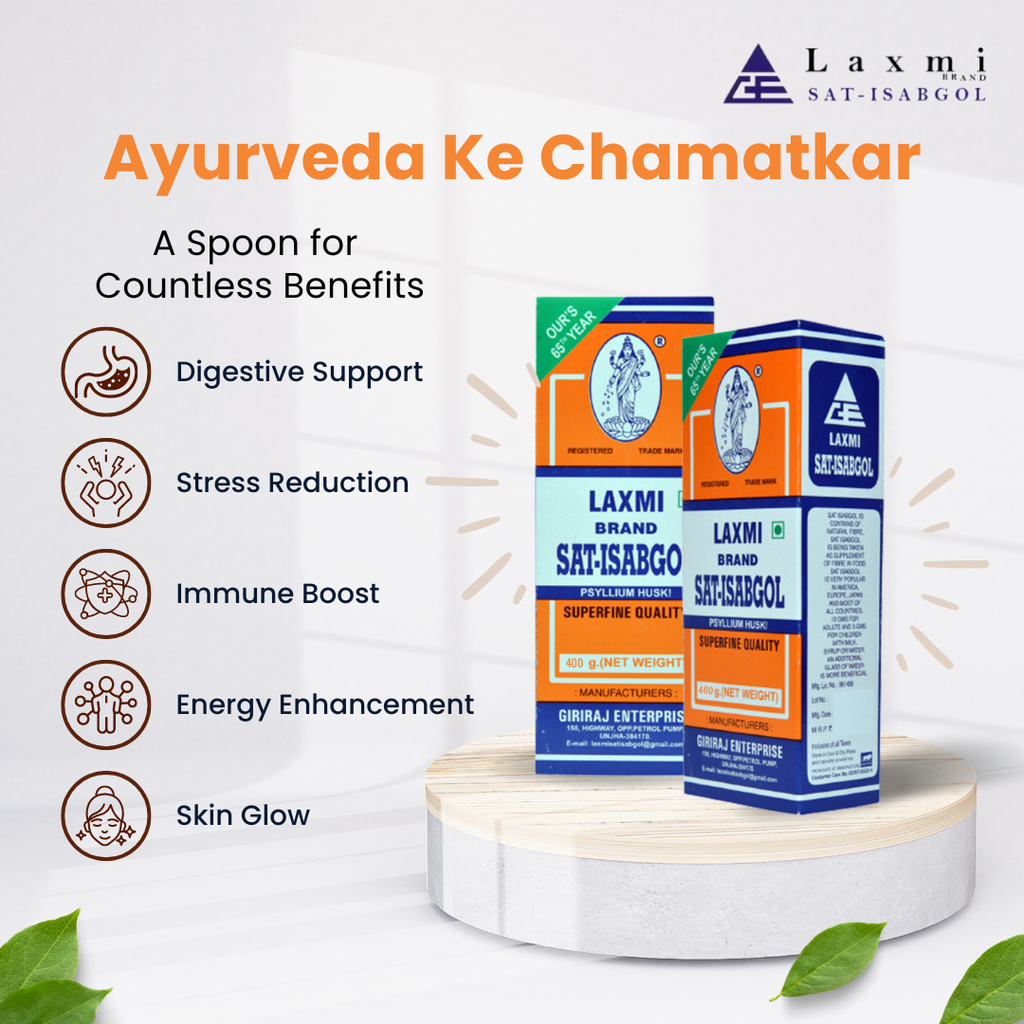
Isabgol, also known as psyllium husk, is a dietary fiber derived from the seeds of the Plantago ovata plant. It is a popular, natural remedy used to treat and manage a variety of digestive issues.
How it works
Isabgol is rich in soluble fiber and mucilage, a colorless gelling agent. When mixed with water or other liquids, it absorbs the fluid and swells to form a bulky, gel-like mass. This helps regulate bowel movements by:
- For constipation: It adds bulk to the stool, making it softer and easier to pass.
- For diarrhea: It soaks up excess water in the intestines, improving stool consistency.
Common uses and health benefits
- Relieves constipation: Isabgol is one of the most widely used home remedies for constipation.
- Manages diarrhea: It can help solidify loose stools, making it an effective treatment for mild diarrhea.
- Aids in weight management: By promoting a feeling of fullness, it can help prevent overeating and reduce cravings.
- Supports heart health: Isabgol binds to bile acids in the intestines, which prompts the liver to use more cholesterol to produce new bile acids. This process can help reduce overall blood cholesterol levels.
- Helps control blood sugar: By slowing down the absorption of carbohydrates, isabgol can assist in managing blood glucose levels.
- Promotes bowel and gut health: It acts as a prebiotic, which nourishes the beneficial bacteria in your gut.
How to take isabgol
Isabgol is typically sold as a husk or powder. It should always be mixed with a sufficient amount of water or another liquid, such as juice, lassi, or milk. Taking it without enough liquid can cause it to swell and potentially lead to choking or a blockage.
- For adults: A common dosage is 1–2 teaspoons, taken once or twice a day.
- Timing: It is often recommended to take it before bed or as directed by a healthcare provider.